
Damage Starts Where You Cannot See
Deck repairs in Framingham for rotted ledger boards, failing posts, and railings that no longer meet code
Pressure-treated decks built a decade or more ago across Framingham's suburban lots follow a predictable failure sequence: the ledger board and post bases deteriorate long before the surface boards show visible rot. Peak Blue Services LLC repairs decks in Framingham by inspecting the structural connections first, because surface replacement without checking the framing underneath leaves the actual damage in place. Homeowners who notice a soft spot underfoot or a railing that shifts under light pressure are often dealing with a problem that started at the ledger attachment or the post base hardware.
The crew begins every repair by working through the ledger, joists, posts, and connectors before touching the decking surface. Rotted sections are cut out and replaced with matching lumber, and loose or corroded fasteners are swapped for corrosion-resistant hardware appropriate for ground-contact pressure-treated material. Railings are re-secured to code height and spacing, which matters on older decks where the original installation may have predated current balusters-per-linear-foot requirements.
Arrange an on-site inspection so the crew can identify where the structural deterioration actually begins before any repair scope is quoted.
How the Repair Corrects What Is Actually Failing
A deck repair done correctly starts at the ledger-to-house connection, where water infiltration and inadequate flashing cause most of the hidden rot in decks built before current building codes addressed that junction. Peak Blue Services LLC has been handling this work for ten years, and the pattern on older suburban decks is consistent: the post base connectors corrode, the ledger pulls moisture from the rim joist behind it, and the surface boards look acceptable right up until the framing beneath them is compromised.
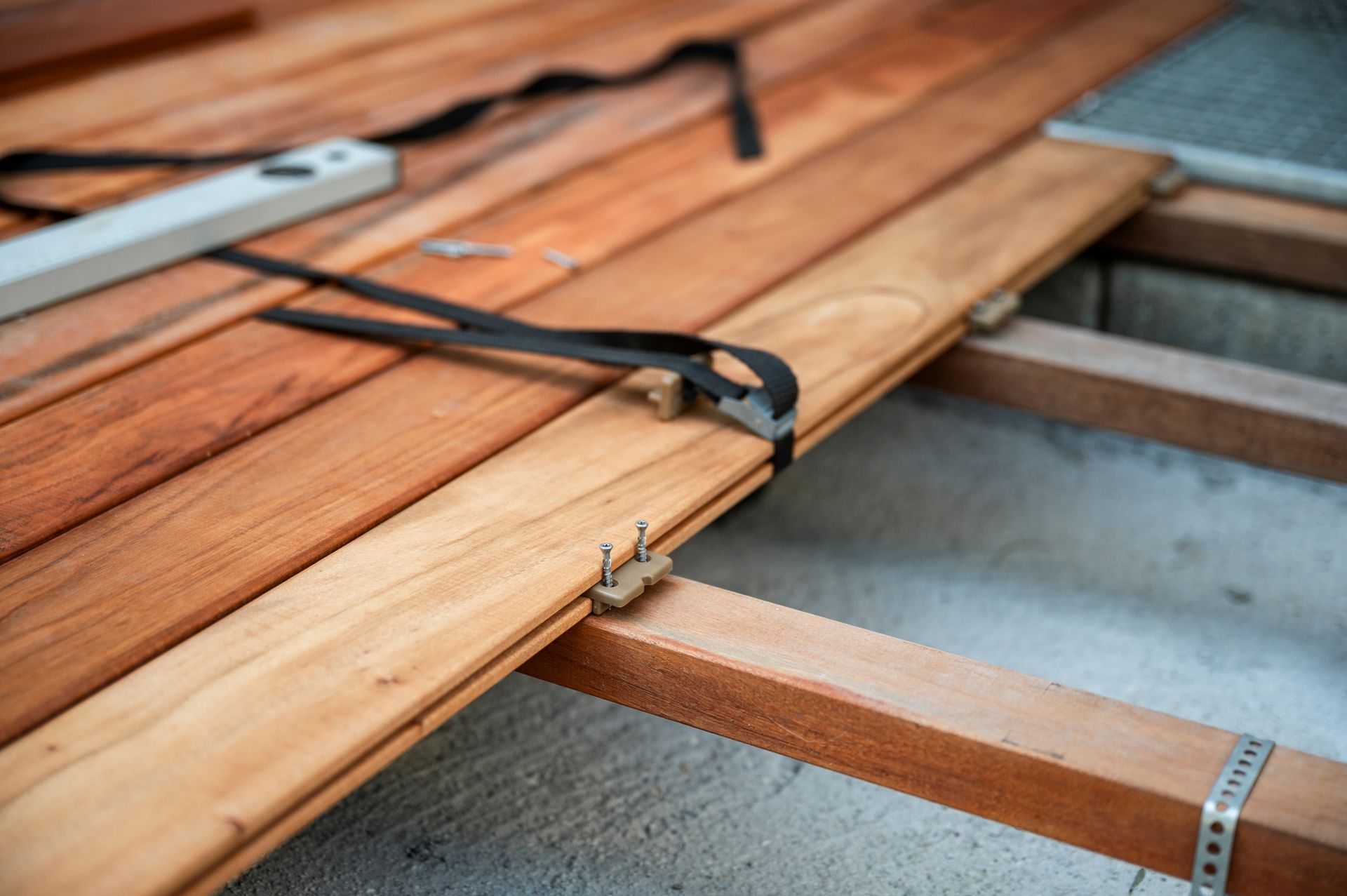
Once repairs are completed, the deck no longer flexes laterally under foot traffic, railing sections hold firm rather than shifting at the post connection, and surface boards sit flat without the soft spots that signal joist failure beneath them. Hardware replacements using corrosion-resistant connectors are visible at the post bases and joist hangers, giving a clear indication that the structural connections have been addressed rather than painted over.
The scope of a repair is limited to what is actually failing, so boards that are structurally sound are left in place even if they show surface weathering. Matching replacement lumber to the existing profile keeps the repaired sections consistent with the rest of the deck rather than visually patched.
What Property Owners Ask About the Work
Older pressure-treated decks across Framingham raise similar questions about what to fix, what to leave, and what the finished repair will look like. The answers below cover how the work is actually performed.
What does the crew check before replacing any decking boards?
The inspection covers the ledger board, joist hangers, post base connectors, and the beam-to-post connections, because those structural points fail before surface boards in most cases. Surface boards are evaluated last, not first.
How is rotted lumber cut out without disturbing the sections that are still sound?
The crew cuts to the nearest solid joist bay on each side of the damaged section, removes the compromised material, and sistered or replaced joists are installed before the new decking is fastened. This keeps the surrounding framing intact.
When should a railing be replaced rather than re-secured?
Railings that have lost structural attachment at the post-to-frame connection, or where the post itself has rotted at the base, require replacement rather than re-tightening. Re-securing a fastener into deteriorated wood does not restore the holding strength the connection requires.
Why does hardware selection matter on a deck repair in Framingham?
Pressure-treated lumber at the grades used for ground-contact applications reacts with standard zinc fasteners over time, accelerating corrosion at the connector. Stainless or hot-dipped galvanized hardware is specified for those connections to prevent the same failure from recurring.
What does a finished deck repair look like at the ledger?
A properly repaired ledger connection includes correctly lapped flashing that directs water away from the rim joist, corrosion-resistant lag hardware at the prescribed spacing, and no direct wood-to-masonry or wood-to-siding contact that traps moisture.
Peak Blue Services LLC also performs deck repairs in Natick, Ashland, Sherborn, Wayland, and Boston. To review the specific boards, connections, and hardware on your deck, contact Peak Blue Services LLC to schedule a structural walkthrough before the repair scope is finalized.