
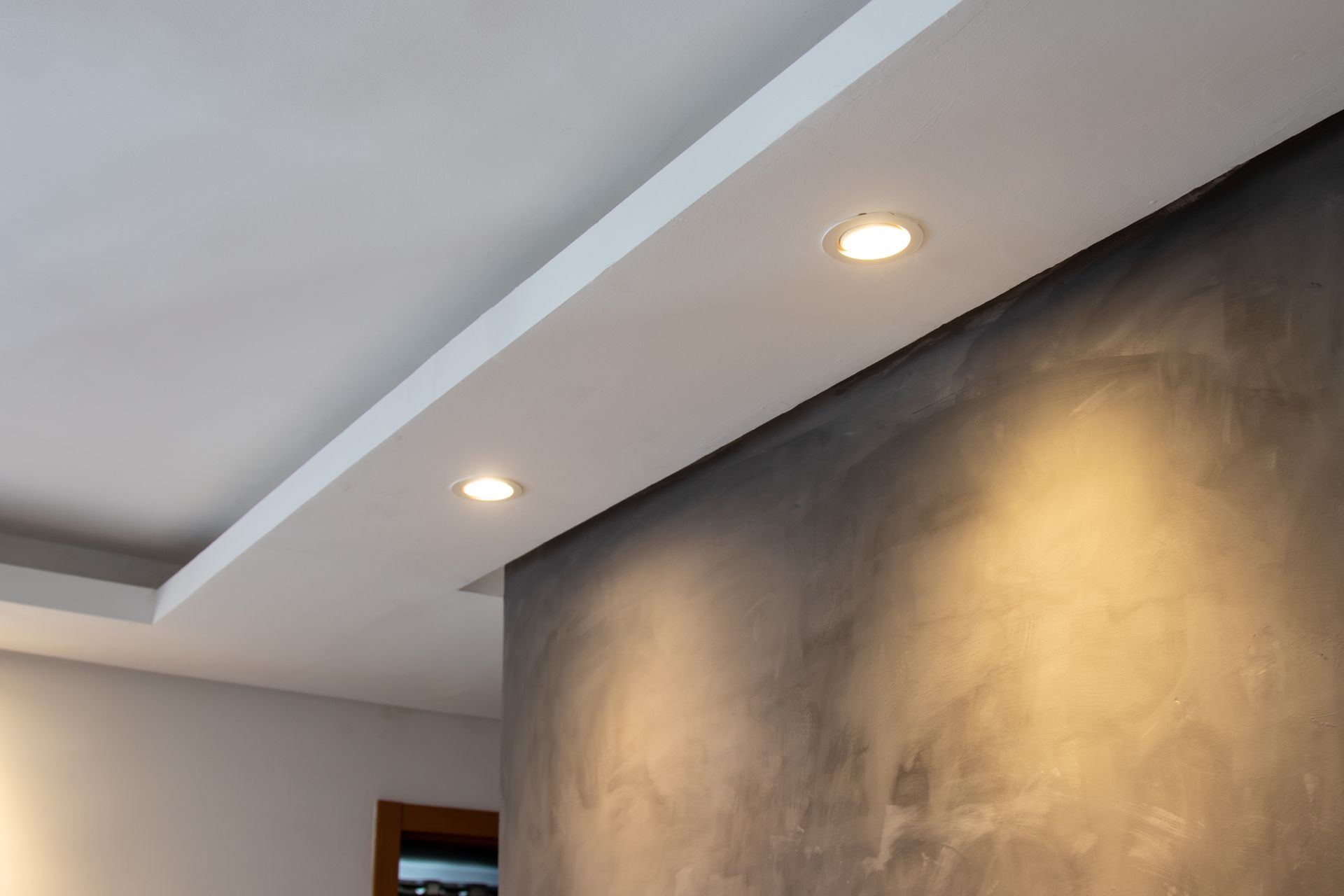
Fixtures Wired, Mounted, and Tested Before Departure
Light Fixture & Hardware Installation in Framingham for ceiling fans, TV mounts, and video doorbells in homes with older ceilings and wiring
Plaster ceilings in older Massachusetts homes present a specific installation challenge that the hardware packaged with most fixtures does not account for: the mounting box supplied in the kit is rated for standard drywall spans, not for the combined weight of plaster, lath, and a ceiling fan in motion. Peak Blue Services LLC installs light fixtures, ceiling fans, TV mounts, Ring cameras, video doorbells, and outlet and switch replacements in Framingham, and the first step on any ceiling fixture is confirming that the mounting box is rated for the load and, where it is not, replacing it with a fan-rated brace before the new unit goes up.
Power is shut off at the breaker and confirmed dead before the old fixture is disconnected. The mounting point is inspected for box rating, electrical box condition, and wire gauge compatibility with the new fixture. For TV mounts, the crew locates studs using a stud finder, confirms the mount pattern aligns with stud spacing, and uses rated anchors for any portion of the mount that falls between framing members—level is checked before the display is attached.
Call (774) 414-8922 to set up an installation visit with Peak Blue Services LLC and go over the specific fixture or hardware you need mounted.
Why Older Homes Require a Different Installation Approach
The distinction between a ceiling fan installation in a newer home and one in a pre-1960 Massachusetts home built with plaster-and-lath comes down to two variables: box rating and wire gauge. Standard electrical boxes are rated for fixtures up to 35 or 50 pounds at rest, not for the dynamic load a fan generates in motion—a fan-rated brace kit, expanded between joists above the ceiling, provides the correct anchor point independent of box age. Wiring in older homes may also be aluminum or early copper in gauges that require an assessment before a modern fixture is connected directly.
After installation, the fixture is tested through all functions before the crew leaves: a ceiling fan is run at each speed and checked for wobble, a light fixture is confirmed on both switch legs if it is on a two-switch circuit, and a video doorbell is paired to the app and its field of view verified on the homeowner's device. What you see at the end is a unit that is straight, balanced, and operating correctly—not one that needs a follow-up visit to address vibration or a connection that was not confirmed at the time.
Electrical work that falls outside handyman scope—panel work, new circuit runs, or aluminum wiring remediation—is handled by a licensed electrician brought in specifically for that portion of the job, and the homeowner is informed in advance about what is included in the handyman scope versus what requires the licensed trade.
Questions Before Starting Your Project
These questions address how fixture and hardware installation is performed, what affects the approach in older homes, and what the finished installation should look and function like.
How does a crew determine whether an existing ceiling box needs to be replaced before a fan goes up?
The box is checked for its weight rating stamp and whether it is anchored to framing or simply friction-fit in the ceiling opening—a box that is not secured to a joist or rated brace cannot handle the dynamic load of a fan in motion and must be replaced before installation proceeds.
What is a fan-rated brace and how is it installed in a plaster ceiling?
A brace kit is a steel bar that expands between joists from inside the ceiling cavity; it is inserted through the existing fixture opening, positioned between the nearest joists, and expanded until it is locked against both, providing a solid anchor point without opening the ceiling.
How are TV mounts anchored when studs do not line up with the mount pattern?
The portions of the mount that fall on studs are fastened with structural screws driven into the framing; the portions between studs use toggle or snap anchors rated for the combined weight of the mount and the display, and the load is distributed across all anchor points before the display is attached.
Why does a ceiling fan wobble after installation and how is it corrected?
Wobble is usually caused by blade bracket screws that are not fully tightened, blades that are not at identical pitch angles, or a canopy that is not seated flat against the mounting plate—each blade and its bracket is checked individually, and a balancing clip kit is used if pitch variation is the cause after hardware is confirmed tight.
What should a video doorbell installation include beyond mounting the device?
The wiring connection to the existing doorbell circuit is checked for voltage compatibility with the new unit, the chime kit or bypass resistor required by most smart doorbell models is installed at the interior chime, and the device is confirmed to be sending motion alerts and live video before the crew leaves.
Peak Blue Services LLC also installs light fixtures and hardware in Natick, Ashland, Sherborn, and Wayland. To review the specific fixture, fan, or mount you need installed and schedule a visit, call (774) 414-8922.