
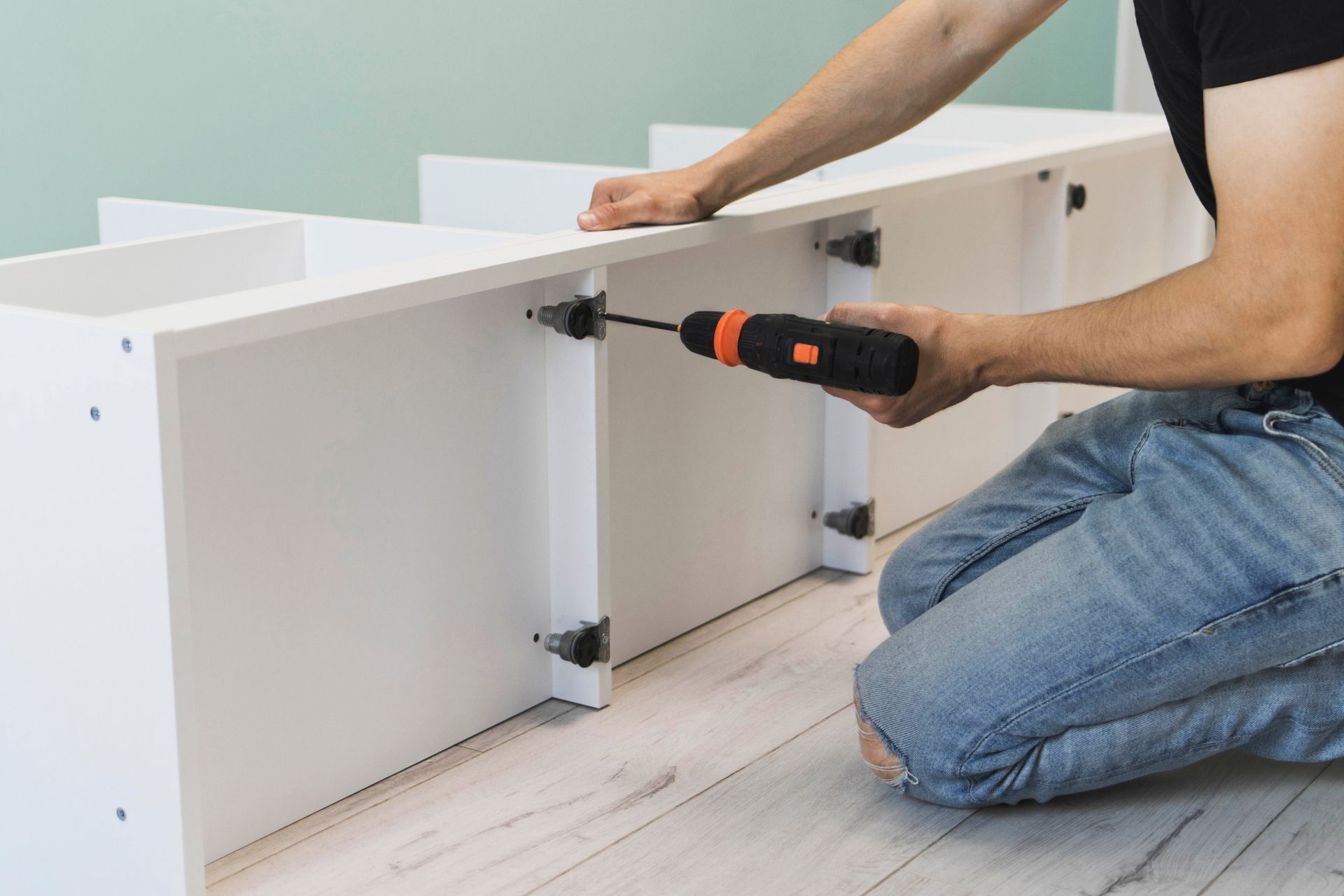
Flat-Pack Furniture Built Solid the First Time
Furniture Assembly Services in Framingham for large or complex pieces that arrive unassembled and need to be built correctly on site
Carrying flat-pack boxes up narrow stairwells and through the tight landings common in older Massachusetts homes is the first constraint on many furniture assembly jobs in Framingham—the second is making sure the piece is assembled in the correct sequence so fasteners seat properly and the frame does not rack. Peak Blue Services LLC handles furniture assembly in Framingham, from flat-pack cases and bed frames to heavy wall units, following the manufacturer's sequence and checking fastener torque and levelness before packaging is removed from the space.
The crew opens boxes and inventories parts against the manual before assembly begins, so missing or damaged components are identified at the start rather than mid-build. Each step in the manufacturer's sequence matters because cam locks and dowels in flat-pack furniture are designed to be seated in a specific order—reversing steps or skipping ahead usually means partially assembled panels have to be pulled apart to correct the sequence, which can strip cam housings in the process.
To arrange an assembly visit from Peak Blue Services LLC, call (774) 414-8922 and describe the pieces you need built so the crew can prepare the right tools before arriving.
What Furniture Assembly Actually Accomplishes
Assembly done to manufacturer specifications means the piece bears load the way it was engineered to—a bookcase that is racked even slightly will not distribute weight evenly across its shelves, and the back panel, which provides lateral rigidity, may pull free from its grooves over time if it is not seated fully during assembly. Tightening hardware so the piece does not rack is the most consequential step in flat-pack assembly, and it requires working systematically from the base up rather than tightening each fastener fully before moving to the next joint.
Once assembly is complete, tall dressers and bookcases are anchored to the wall where the piece calls for it—anti-tip hardware is included in most modern furniture kits and is installed into a wall stud, not just the drywall surface. The finished piece sits level, all drawers and doors operate without binding, and packaging is removed from the room before the crew leaves.
Multi-level homes in Framingham and Natick sometimes require assessing whether a large piece can be carried assembled or whether it needs to be built in the destination room—wall units and sectional shelving in particular often cannot be moved through a doorway after assembly, so the crew evaluates access before deciding where to start the build.
Answers About How the Work Is Done
The following questions address the assembly process, what affects how a job is sequenced, and what a correctly assembled piece looks and functions like when the crew finishes.
Why does assembly sequence matter for flat-pack furniture?
Manufacturers design cam locks and dowel joints to be seated in a specific order so each connection can be tightened while the panel is still accessible—assembling out of sequence often means earlier joints cannot be fully tightened once surrounding panels are in place, which leaves the structure loose.
How is anti-tip anchoring done for tall dressers and shelving?
The bracket supplied with the piece is fastened to the back of the furniture and then to a wall stud using a screw long enough to reach the framing behind the drywall—anchoring into drywall alone does not provide reliable resistance to tipping force under load.
What happens when parts are missing or damaged from the box?
The crew inventories all parts against the manual before assembly starts; if something is missing, the manufacturer is contacted for a replacement part rather than substituting hardware that may not match the tolerances the fastener system was designed for.
How do narrow stairwells in older Framingham homes affect the assembly plan?
In homes where hallways and stair landings limit what can be carried assembled, the crew assesses clearance before moving boxes, and large pieces—particularly wall units—are built in the destination room rather than partially assembled downstairs and carried up.
What should a correctly assembled piece look like when the work is finished?
All panels should sit flush at their joints without visible gaps, drawers should pull and close smoothly without catching on the frame, and the piece should not shift or wobble when moderate lateral pressure is applied to its top surface.
Peak Blue Services LLC also assembles furniture in Natick, Ashland, Sherborn, and Wayland. Review the pieces you need built and call (774) 414-8922 to confirm availability and what the crew will need to bring.