
Toilets Repaired or Reset on Solid Footing
Toilet Repair and Replacement in Framingham for homes where shifted floor flanges or aging cast-iron drains complicate a straightforward fixture fix
A toilet that rocks slightly, runs continuously, or shows water at the base after flushing is not a cosmetic problem—those symptoms point to specific mechanical failures that get worse if the fixture keeps running. Peak Blue Services repairs and replaces toilets for Framingham homeowners, with the owner and his father handling the fixture work directly and a licensed plumber brought in when supply-line or drain work goes beyond the toilet connection itself. Older MetroWest homes are where this service comes up most often, because the cast-iron drains and floor flanges in those properties have had decades to shift, corrode, or pull out of level.
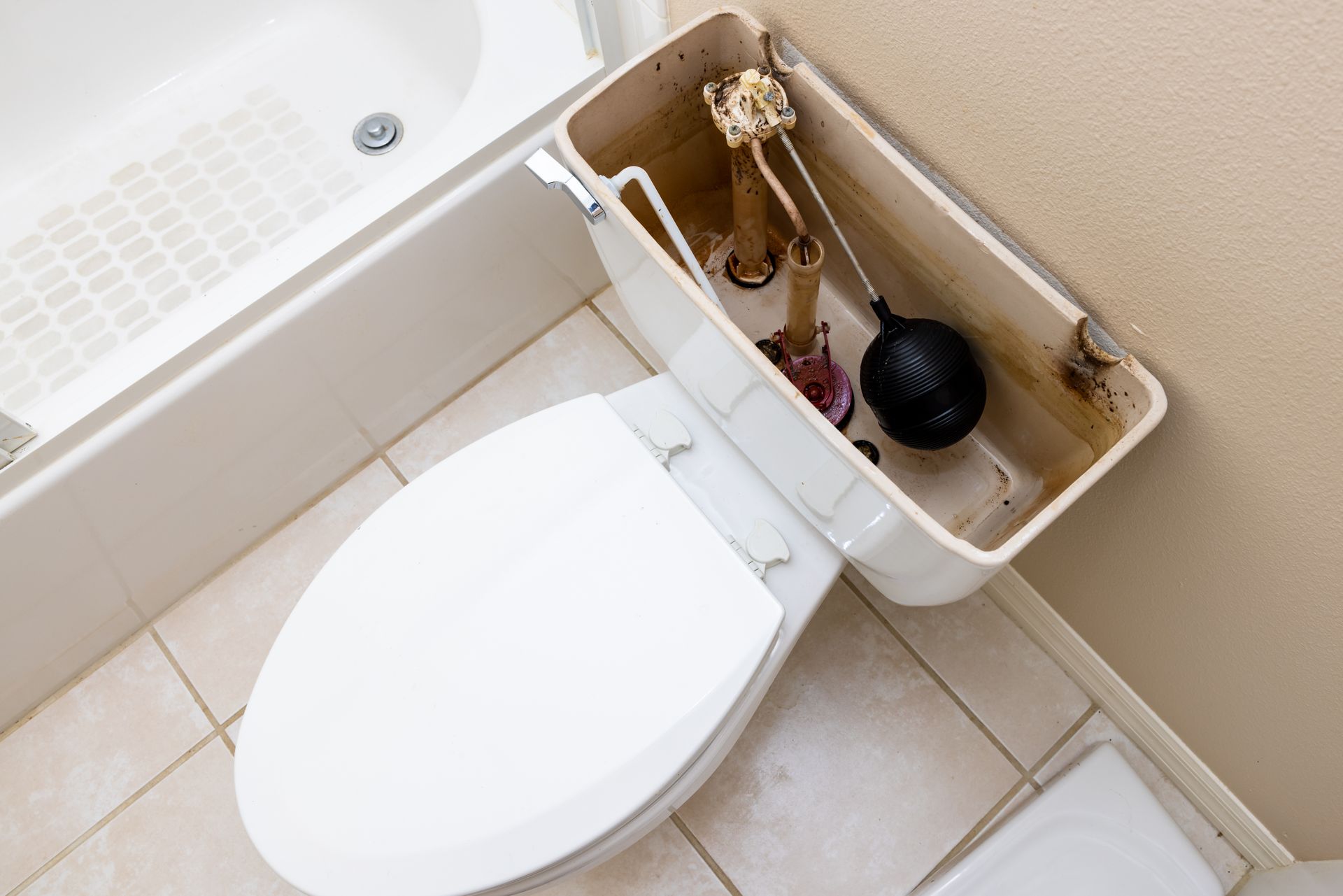
The work starts with isolating the water supply and then checking the components most likely to be causing the problem: the flapper, fill valve, wax ring, and floor flange. Each of those parts fails in a different way and produces a different visible symptom—a worn flapper causes the fill valve to cycle on and off repeatedly, while a damaged wax ring or shifted flange allows water to seep onto the subfloor at the base, which is the failure pattern that causes the most damage if it goes unaddressed. Repairs are made where the parts are sound; if the flange or floor condition makes a reliable reseat impossible, the crew explains that scope before any replacement is started.
Book a visit so the crew can inspect the flange and floor condition before deciding whether a repair or a full replacement is the right approach for your situation.
What Toilet Repair Actually Accomplishes
Interior tank repairs—flapper, fill valve, flush handle, and float—address the mechanical reasons a toilet runs, cycles, or does not flush completely. A flapper replacement is a simple fix when the rubber has degraded, but a fill valve that vibrates or fails to shut off completely requires replacing the valve assembly rather than adjusting it, and confirming which is needed before buying parts saves a second trip.
After a repair, the fill cycle stops when the tank reaches the correct water level, the flush is complete and consistent, and there is no movement at the base when the toilet is used. After a full replacement and reseat on a new wax seal, the fixture sits level, does not rock under load, and the base-to-floor connection is watertight. Peak Blue Services confirms function before leaving so the homeowner is not discovering a leak an hour after the crew is gone.
The work Peak Blue Services handles covers the fixture itself—the toilet, the tank components, the wax ring, and the connection to the existing flange. Supply-line replacement and any work involving the drain stack, venting, or the flange anchor point in the subfloor are handled by the licensed plumber the business brings in when that scope is confirmed. That determination is made during the visit and explained before any labor begins.
What Property Owners Ask About the Work
These questions address what toilet repair and replacement actually involves, how the crew decides what is needed, and what changes once the work is complete.
How do you determine whether a toilet needs repair or full replacement?
The condition of the flange, the floor at the base, and the porcelain itself drive that decision—if the flange is intact and the floor is solid, most functional problems are repaired at the component level; if the flange has shifted or the floor is compromised, replacement on a corrected base is the more reliable outcome.
What does a shifted floor flange look like and why does it matter?
A shifted flange no longer sits flush and level with the finished floor surface, which means a new wax ring will not seat evenly around it—that uneven seal is what allows water to work its way out at the base over time rather than draining into the stack.
Why do older Framingham and Natick homes see flange problems more often than newer construction?
Original cast-iron drain lines in mid-century homes have had decades to corrode, and the lead or oakum packing used to connect the floor flange to those drains can compress or fail, allowing the flange to shift relative to the finished floor level.
How is the wax ring replaced during a toilet reset?
The toilet is removed from the floor, the old wax is cleaned off both the flange and the toilet horn, a new ring is set on the flange, and the toilet is lowered straight down onto it so the wax compresses evenly—rocking the toilet during this step breaks the seal before it is set.
What is checked before the job is considered complete?
The supply valve is opened, the tank fills and the fill valve shuts off at the correct level, two full flushes are completed to confirm the seal, and the base is checked for any sign of moisture before the crew closes the job.
Peak Blue Services also repairs and replaces toilets in Natick, Ashland, Sherborn, Wayland, and Boston. Call Peak Blue Services LLC at (774) 414-8922 to describe what your toilet is doing so the crew arrives with the right parts for your specific fixture and floor condition.