
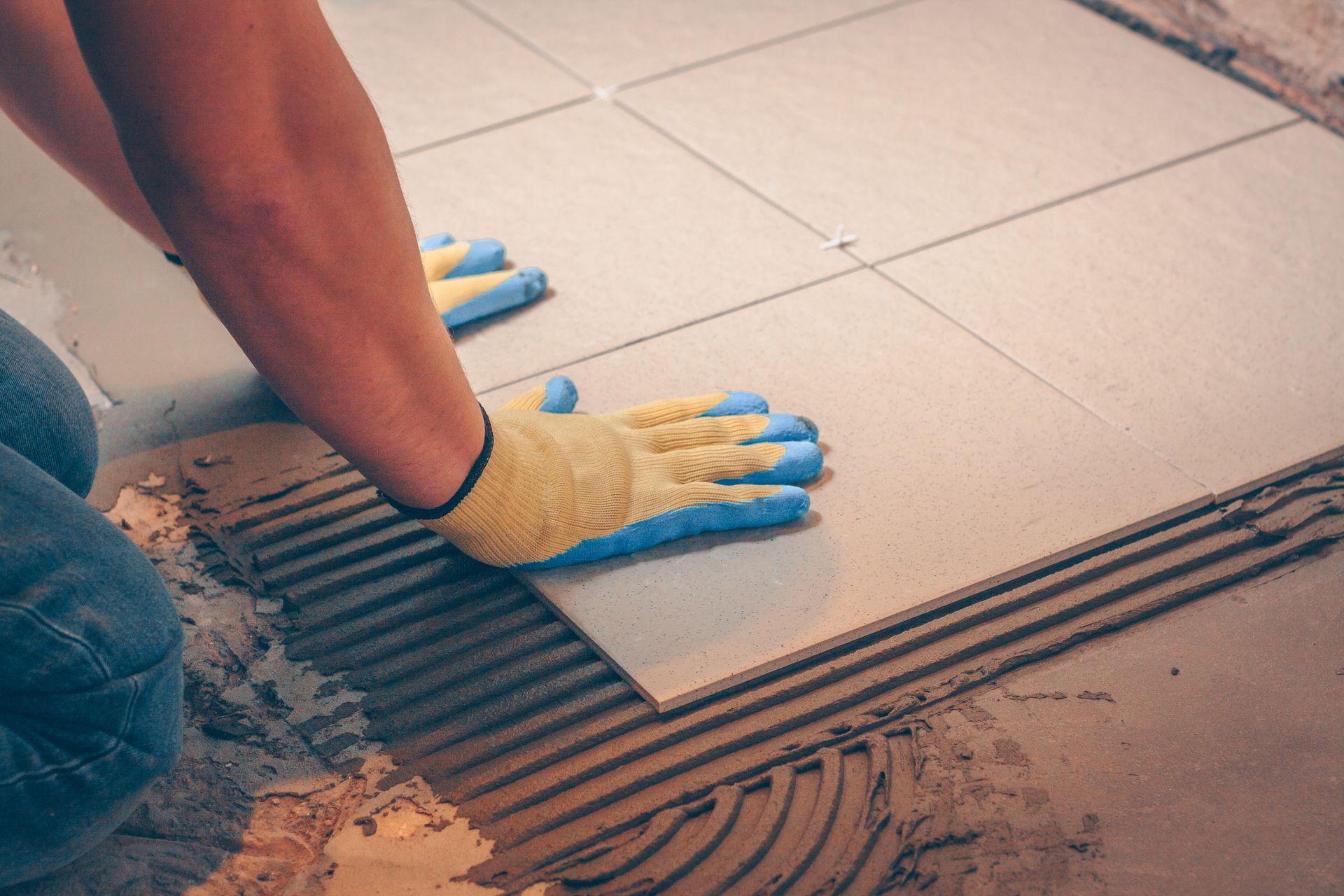
Tile Set on a Substrate That Will Hold It
Tile Work in Framingham for floors requiring substrate correction, level checks, and proper mortar selection before tile is set
Tile set on a substrate that flexes, dips, or has not been assessed for load capacity will crack at the grout joints first, then at the tile face itself, often within a year of installation. Peak Blue Services LLC handles tile flooring installation in Framingham and across the MetroWest area, starting each job with a substrate check that determines whether the floor framing is stable and flat enough to hold tile without deflection. The owner and his father carry out the tile work directly, and licensed subcontractors handle any plumbing or electrical connections that arise during the job.
Older homes—including many throughout Framingham and Natick—were framed for lighter floor loads than tile requires, and the subfloor assembly that works fine under vinyl or hardwood can flex enough under foot traffic to telegraph movement through a mortar bed and crack the grout. Identifying that deflection before the tile goes down, rather than after, is the step that prevents the most common and most expensive tile failure. The crew checks levelness, addresses any areas where the substrate needs correction, and selects mortar suited to the tile size being installed, since large-format tiles require a mortar with higher flexibility ratings than smaller mosaic work to bridge the contact area properly.
Arrange a site visit with Peak Blue Services to assess the existing substrate and determine what preparation the floor needs before tiling begins.
Why Substrate Work Determines the Outcome
Tile work is a sequence where each step depends on the one before it being correct. The substrate has to be flat and stable before mortar is applied, the mortar has to be the right formulation for the tile size and substrate type, and the tile has to be set with full back coverage rather than spot-troweled, because voids beneath the tile create the same deflection problem the substrate check was meant to prevent. Grouting and sealing are the final steps, and they only perform correctly when the tile beneath them is set solid—grout over a tile that moves will crack at the tile edge consistently.
Once the job is finished, grout joints should be consistent in width and color across the field, tile faces should be flat and free of lippage at the edges, and the surface should not flex or produce hollow sounds when tapped across multiple locations. Hollow spots indicate voids under the tile from insufficient mortar contact, which is a setting deficiency that shows up on inspection and will eventually result in cracked tile or loose sections.
Confirm with Peak Blue Services before the job starts whether removal of the existing flooring is included in the quote, since old vinyl, ceramic, or mud-bed material adds labor and sometimes reveals substrate conditions that change the preparation scope. Knowing what the quote covers at the start prevents scope disputes once the floor is open.
Questions Before Starting Your Project
Tile installation raises detailed questions about preparation and material selection, particularly in older Framingham homes where the subfloor assembly and framing were not originally designed with tile loads in mind.
How do you determine whether the existing subfloor can support tile without deflection?
The crew checks the span between joists, the thickness and condition of the subfloor sheathing, and uses a deflection standard—typically L/360, meaning the floor should flex no more than one inch per 360 inches of span—to confirm whether the assembly is stiff enough or needs reinforcement before tile goes down.
Why does mortar selection change based on tile size?
Larger tiles require a mortar with greater flexibility and better slump resistance so the full back of the tile contacts the bed without voids, while smaller tiles can be set with a more standard thinset because the contact area per tile is smaller and easier to achieve full coverage on.
What preparation does a tile job typically require in an older Framingham home that a newer build would not need?
Homes built before current building codes often have thinner subfloor assemblies and longer joist spans that must be reinforced or overlaid with cement board before tile is set, a step that is typically already built into new construction floor systems.
How is grout selected for a tile floor, and when is sealing necessary?
Grout type depends on joint width—sanded grout for joints wider than one-eighth inch, unsanded for narrower joints—and sealing is recommended for any unglazed tile and for most grout joints in areas that see regular water exposure, since unsealed grout absorbs staining from the first use.
What maintenance does a tile floor need after installation to stay in good condition?
Grout should be resealed periodically depending on traffic and water exposure, and any cracked grout joint should be repaired promptly before moisture works beneath the tile and compromises the mortar bond at that location.
Peak Blue Services LLC also performs tile work in Natick, Ashland, Sherborn, Wayland, and Boston. Call (774) 414-8922 to describe the space and the existing floor condition so the substrate assessment is focused on the right variables from the first visit.