
Receptacles and Switches Replaced Without Shortcuts
Outlet and Switch Replacement in Framingham for aging or failed devices in older New England homes and multi-family buildings
Outlets and switches in older New England construction wear out in ways that are easy to overlook until a device stops holding a plug securely or a switch begins to arc when it is toggled. Peak Blue Services replaces worn, loose, or damaged outlets, switches, and dimmers across Framingham and the MetroWest area, handling device-level replacements directly and bringing in a licensed electrician when the scope extends beyond the fixture itself. Multi-family buildings and homes built before the 1980s are where this work comes up most consistently, because the receptacles and switches in those properties have often been in service for decades without replacement.
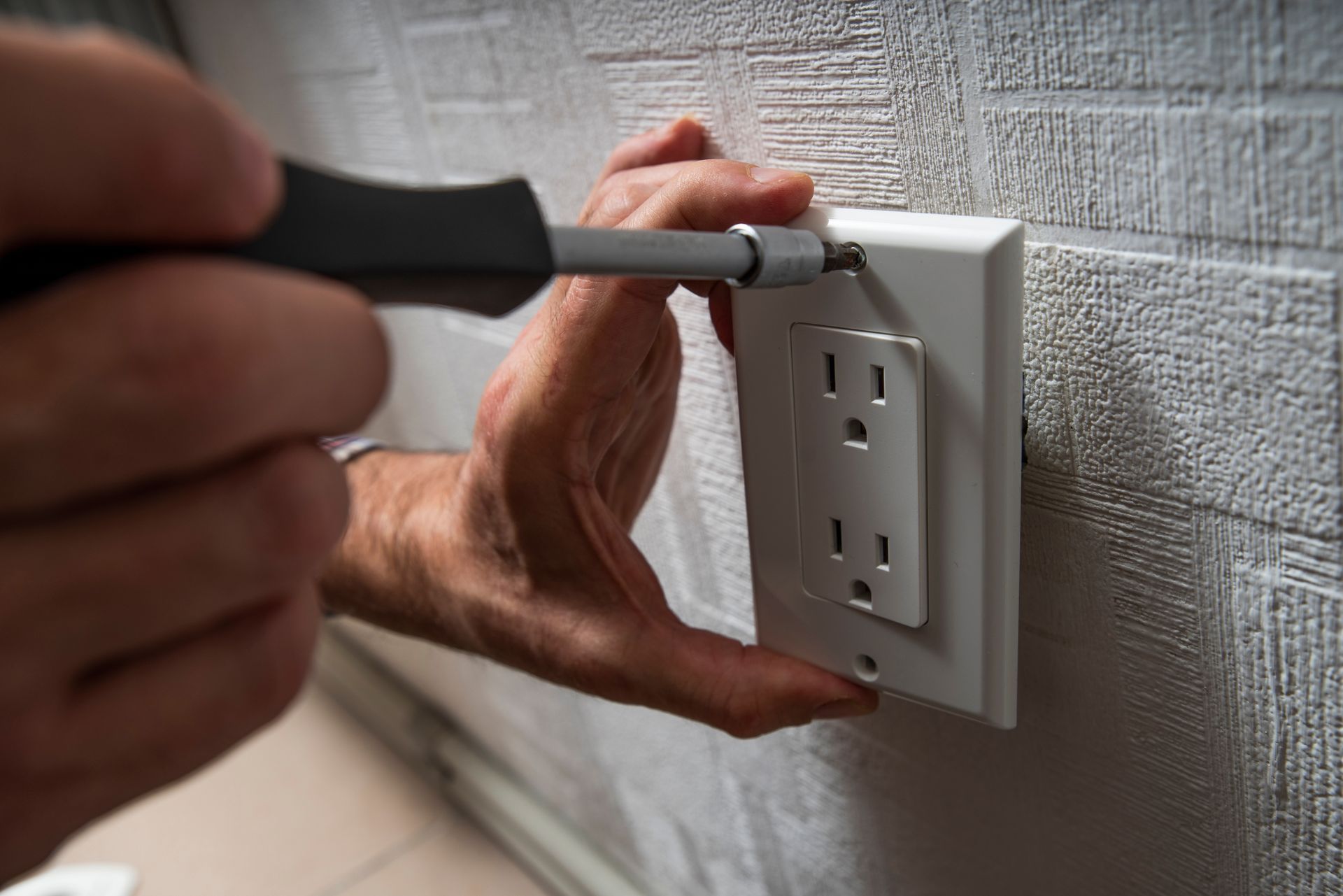
The process begins by shutting off the circuit and testing the device to confirm it is de-energized before anything is touched. The old device is removed, the wiring is inspected at the connection points, and a matching replacement—outlet, switch, or dimmer—is installed and verified for correct function. If the wiring behind the device looks unsafe, shows signs of heat damage, or falls outside a handyman scope, the job stops at that point and a licensed electrician is brought in before work continues.
Set up a visit so the crew can assess the specific devices you need replaced and confirm whether the wiring behind them is straightforward or requires licensed electrical review.
The Difference Between Device Replacement and Electrical Repair
Outlet and switch replacement at the device level means swapping the physical component connected to existing wiring—it does not include running new circuits, upgrading panels, or re-routing wiring inside walls. Understanding that boundary matters because it determines what a handyman service can handle versus what requires a licensed electrician, and Peak Blue Services is clear about that line before work begins rather than after.
After replacement, the outlet accepts plugs firmly and releases them without resistance, the switch toggles cleanly without the hum or delay that indicates a failing internal contact, and a dimmer—if installed—controls the connected fixture smoothly across its full range. Loose outlets are among the most common complaints in older Framingham rentals and single-family homes, and a replaced receptacle eliminates the plug-drop problem immediately.
Kitchens and older bathrooms are where outlet failure is most common because those locations see the most use and are often wired with receptacles that predate GFCI requirements—which means a replacement in those rooms frequently involves upgrading to a GFCI outlet rather than swapping like for like. That determination is made at the device and confirmed with the homeowner before the replacement is selected.
Questions Before Starting Your Project
The following questions address what outlet and switch replacement involves, how the work is sequenced, and what to look for in the finished result.
How is the circuit confirmed safe before the old device is removed?
The circuit is shut off at the breaker, then a non-contact voltage tester is used at the device to verify the wires are de-energized before the cover plate comes off—this step is not skipped regardless of how straightforward the job looks.
What causes outlets to stop holding plugs securely over time?
The internal contact clips inside a receptacle wear with repeated insertion and removal, eventually losing the tension needed to grip a plug blade—there is no adjustment possible, and replacement is the only correct fix once that tension is gone.
When does a standard outlet replacement become a job for a licensed electrician?
If the wiring shows heat discoloration, the insulation is brittle or cracked, the connections are aluminum rather than copper, or the box contains wiring configurations outside a standard device replacement, the crew stops and flags the issue rather than proceeding.
Why do older Framingham multi-family buildings have more outlet and switch failures than newer construction?
Devices in those buildings were installed decades ago and have gone through far more switching and load cycles than their rated life assumed, and in many cases they were never replaced during the building's history—cumulative wear eventually produces failure or loose connections.
How do you determine whether a dimmer is compatible with the fixture it will control?
Dimmers are rated by wattage and by fixture type—LED fixtures in particular require dimmers specifically designed for LED loads, and installing a mismatched dimmer causes flickering or buzzing even when everything is wired correctly.
Peak Blue Services also replaces outlets and switches in Natick, Ashland, Sherborn, Wayland, and Boston. Call Peak Blue Services LLC at (774) 414-8922 to describe which devices need attention and where they are located in your home.