
Doors That Close, Latch, and Seal Correctly
Door Repair & Installation in Framingham for sticking, sagging, and drafty doors that no longer operate as intended
Many homes in Framingham and Wayland were built in eras when solid-wood doors and hand-fitted frames were standard, and those assemblies shift significantly as framing settles over decades of use. Paint applied through multiple renovation cycles builds up on edges and around strike plates, changing the clearances a door needs to swing and latch cleanly. Peak Blue Services LLC repairs, adjusts, and installs interior and exterior doors in Framingham, working through each variable—hinge wear, frame alignment, strike plate position, and edge clearance—before declaring the door functional.
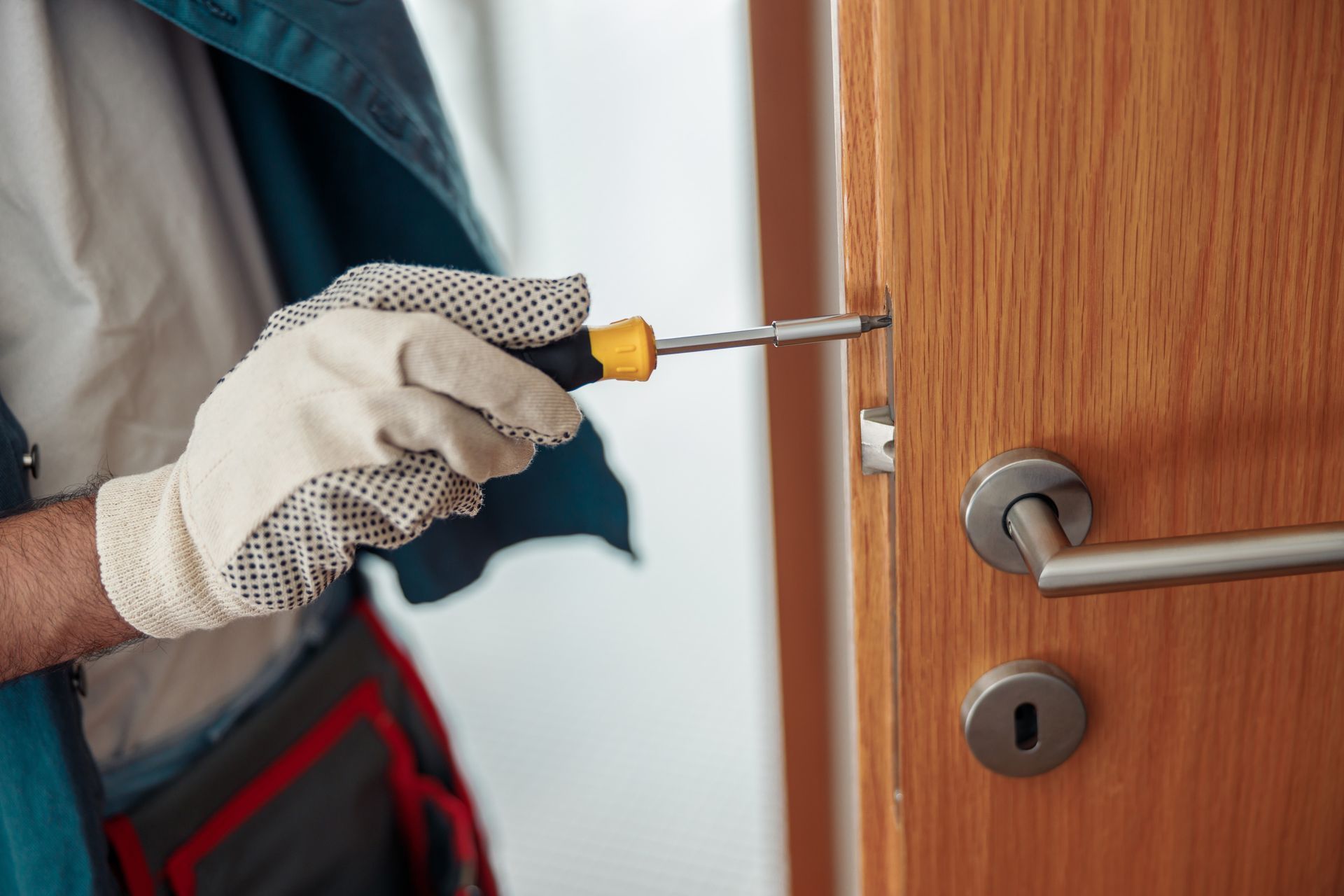
The process starts with the crew checking where the door binds or gaps, then identifying whether the problem is in the hinge leaf, the frame, or the door edge itself. Hinges that have pulled free of the jamb are re-set with longer screws driven into the framing behind the jamb, which holds far better than refilling the original holes. For lock replacement, the existing bore is measured and checked for alignment with the strike before the new hardware is ordered or fitted, because a lock that does not line up with the strike will feel stiff or fail to engage the deadbolt fully.
Contact Peak Blue Services LLC to schedule a door assessment and confirm what adjustment or replacement work will resolve the specific problem at your property.
What Proper Door Adjustment and Installation Requires
A door that sticks along the top or latch side typically means the hinge side has shifted, pulling the door out of square with the frame. Planing the sticking edge without addressing the hinge position produces a gap on the opposite side—fixing the symptom without correcting the cause. The right sequence is to identify and correct the hinge or frame condition first, then trim only what remains necessary after the door is hanging in the correct position.
After adjustment, the door should swing freely through its full arc without dragging, latch without needing the knob lifted or forced, and close flush against the stop on all four sides. On exterior doors, even contact with weatherstripping around the perimeter is visible confirmation that the door is seated correctly in the frame—gaps along the hinge or latch side that let light through indicate the frame or the door itself still needs attention.
Trim installation and repair is part of the same scope of work: casing that has separated from the jamb or the wall face is renailed and filled before the crew leaves, so the finished installation does not require a separate carpentry visit. For homes where the original trim profile is no longer in production, the crew assesses what is closest in dimension so the new section reads consistently with what is already on the wall.
What Property Owners Ask About Door Work
The questions below address how door repair and installation is performed, what drives the specific approach on a given job, and what a correctly functioning door looks and feels like when the work is finished.
How does a crew determine whether a door needs planing or hinge adjustment?
The hinge side is checked first—if the door sags toward the latch, the lower hinge has usually loosened or the jamb has shifted, and planing the edge without addressing that leaves the problem unresolved within a short time.
What happens to the frame on older Framingham homes when hinges are re-set?
In homes where the jamb material has been fastened multiple times, the original screw holes may be stripped; re-setting uses longer screws driven past the jamb and into the structural framing behind it, which gives the hinge leaf a solid anchor independent of the jamb wood condition.
Why does a new lock sometimes feel stiff even after it is installed?
The bore center and the strike plate mortise need to align precisely—a misalignment of even a few millimeters causes the bolt to drag on the strike edge during throw, which makes the lock feel resistant and accelerates wear on the bolt face.
A sagging door typically shows wear on the upper latch corner and the lower hinge corner, suggesting the hinge side has dropped; swelling is more uniform along one edge and usually corresponds to areas of the door exposed to moisture penetration at the frame or threshold.
Plaster surfaces often have a skip-trowel or sand finish that was applied by hand, so matching requires applying joint compound with similar tools and technique rather than a smooth skim—the goal is to replicate the pattern density of the surrounding area rather than apply a uniform texture across the patch.
What does correct weatherstripping contact look like on a finished exterior door installation?
The door should compress the weatherstripping evenly around all four sides when latched, with no visible daylight at any point along the frame—uneven compression on the hinge side usually means the door is still slightly out of plumb in the opening.
Peak Blue Services LLC also handles door repair and installation in Natick, Ashland, Sherborn, and Wayland. To set up a visit and review the specific door or hardware issue at your home, call (774) 414-8922.