
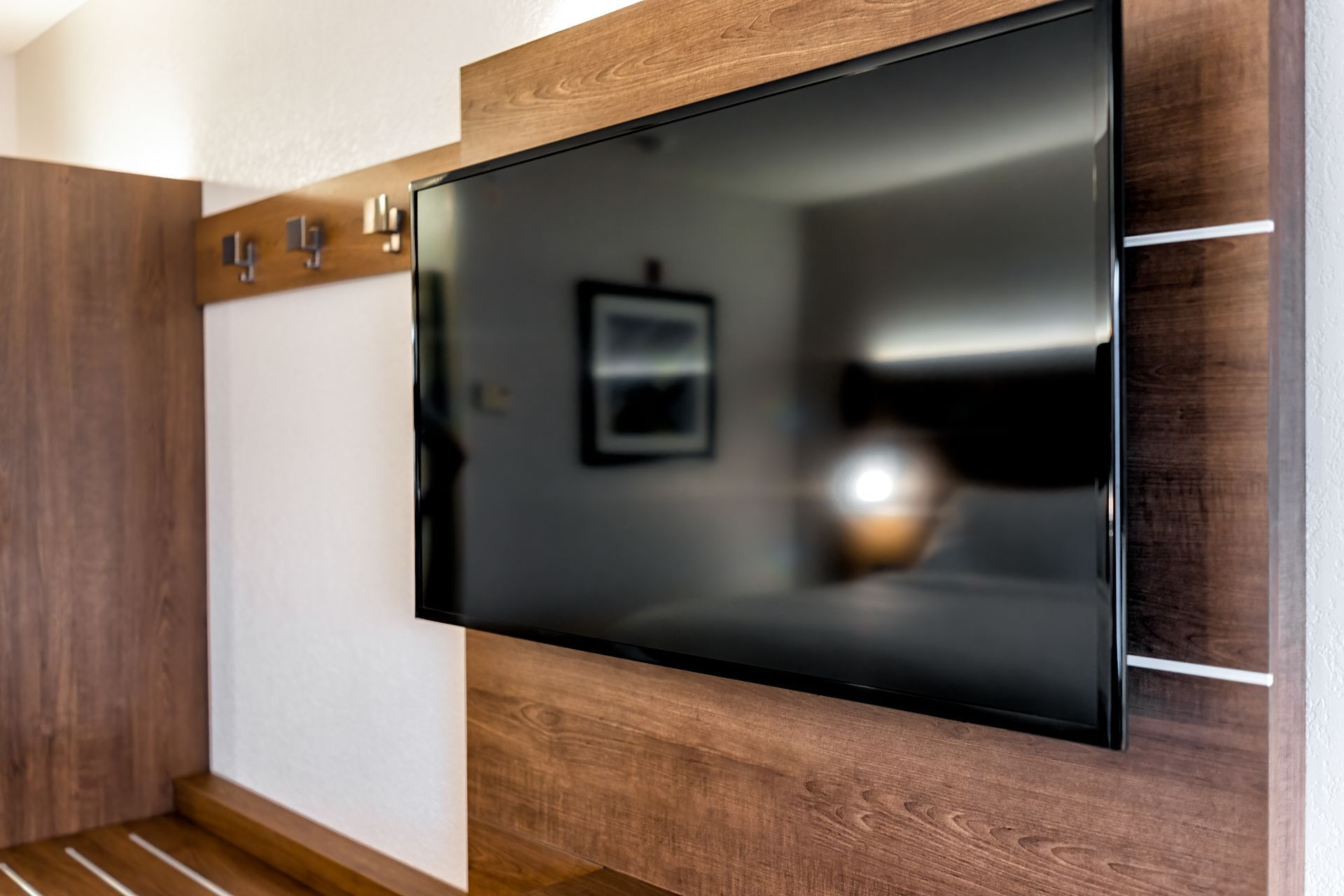
Flat Screens Mounted Flush Without Guesswork
TV Mounting in Framingham for older plaster-and-lath walls where finding solid framing is the first requirement
Plaster-and-lath walls read differently than standard drywall when you are trying to locate studs, and mounting a large flat-screen TV into surface material alone will not hold over time. That is the situation many MetroWest homeowners face, and it is where Peak Blue Services steps in with a process built around confirming what is behind the wall before a single hole is drilled. The owner and his father handle every mount themselves, from wall-type assessment through cable management, so nothing is delegated to someone who has not seen the room.
The job starts with identifying the wall construction—drywall, plaster over lath, or masonry—then locating the framing behind it before the bracket position is committed. In older colonials common across Framingham and Natick, wall framing can be irregular compared to modern stud spacing, which means relying on a stud finder alone is not sufficient; the crew uses multiple methods to confirm anchor points. Once the bracket is secured and level, the TV is hung, height is set for the seating position in that specific room, and cable routing is addressed—anything requiring in-wall power is flagged before work begins so no surprises come up mid-job.
Request an on-site walkthrough so the crew can assess your wall type and confirm the right mounting approach for your room layout.
How TV Mounting Addresses Wall-Specific Challenges
Bracket selection depends on the TV size, wall construction, and whether the mount needs to tilt, swivel, or remain fixed. A fixed low-profile mount works well when the screen is at seated eye level and the seating position does not change, but a tilt or full-motion arm requires anchor points that can handle the increased leverage when the arm is extended—which raises the requirement on what the wall framing must provide.
After the mount is set and the TV is hung, the screen sits flush to the wall, cables are routed cleanly rather than hanging loose, and the bracket hardware is not visible from a normal viewing distance. Peak Blue Services sets the height based on where people actually sit in that room, not a generic measurement, which is the detail that most often gets overlooked in a rushed installation.
Cable management is scoped at arrival rather than assumed—running cables through the wall requires a power solution that may involve an electrician, and that is identified before any work begins rather than discovered after holes are already cut. What is included in the base job is the mount, the hang, and surface cable routing; in-wall work is a separate scope that gets explained clearly up front.
Answers About How the Work Is Done
These questions address the mounting process itself—what gets checked, how decisions are made, and what you will see when the job is finished.
How do you locate studs in a plaster wall?
Plaster over lath does not respond to a magnetic stud finder the same way drywall does, so the crew uses a combination of electronic detection and physical verification to confirm framing location before committing the bracket position.
What determines whether a fixed or articulating mount is the right choice?
Viewing angle and room layout drive that decision—a fixed mount works where the screen will always be watched from one position, while a full-motion arm is warranted when the TV needs to be seen from multiple points in the room or angled away from glare.
Why does height matter and how is it set?
The center of the screen should land at roughly seated eye level for the primary viewing position, which varies by furniture height and room setup—the crew confirms this in the actual space rather than using a standard measurement.
What happens if the wall cannot support a mount at the preferred location?
If framing is not where the preferred position requires, the crew explains the options—adjusting position to hit a stud, using a specialty anchor rated for the load, or flagging that a different wall location is safer—before any holes are made.
How is cable routing handled in older Framingham homes where in-wall power is not already present?
Surface cable channels are used when in-wall routing is not feasible without electrical work, keeping cables organized and off the wall face; in-wall power options are scoped and explained separately before that work is added.
Peak Blue Services also mounts TVs in Natick, Ashland, Sherborn, Wayland, and Boston. Call Peak Blue Services LLC at (774) 414-8922 to describe your wall type and TV size so the crew arrives with the right hardware for your specific installation.