Walls Patched So the Repair Disappears
Drywall Repair & Patching in Framingham for holes, cracks, water stains, and nail pops that show through paint
Peak Blue Services LLC repairs and patches drywall in Framingham, cutting out loose or soft material, installing new board or mesh, and feathering joint compound until the wall surface reads flat under a painted finish. Many homes in the area were built with plaster-and-lath construction, which cracks and bulges differently than modern drywall—a patch in that context has to be worked into an uneven substrate rather than simply filled flush. Homeowners who need the repair to disappear under paint, not just be covered, are the ones this work is designed for.
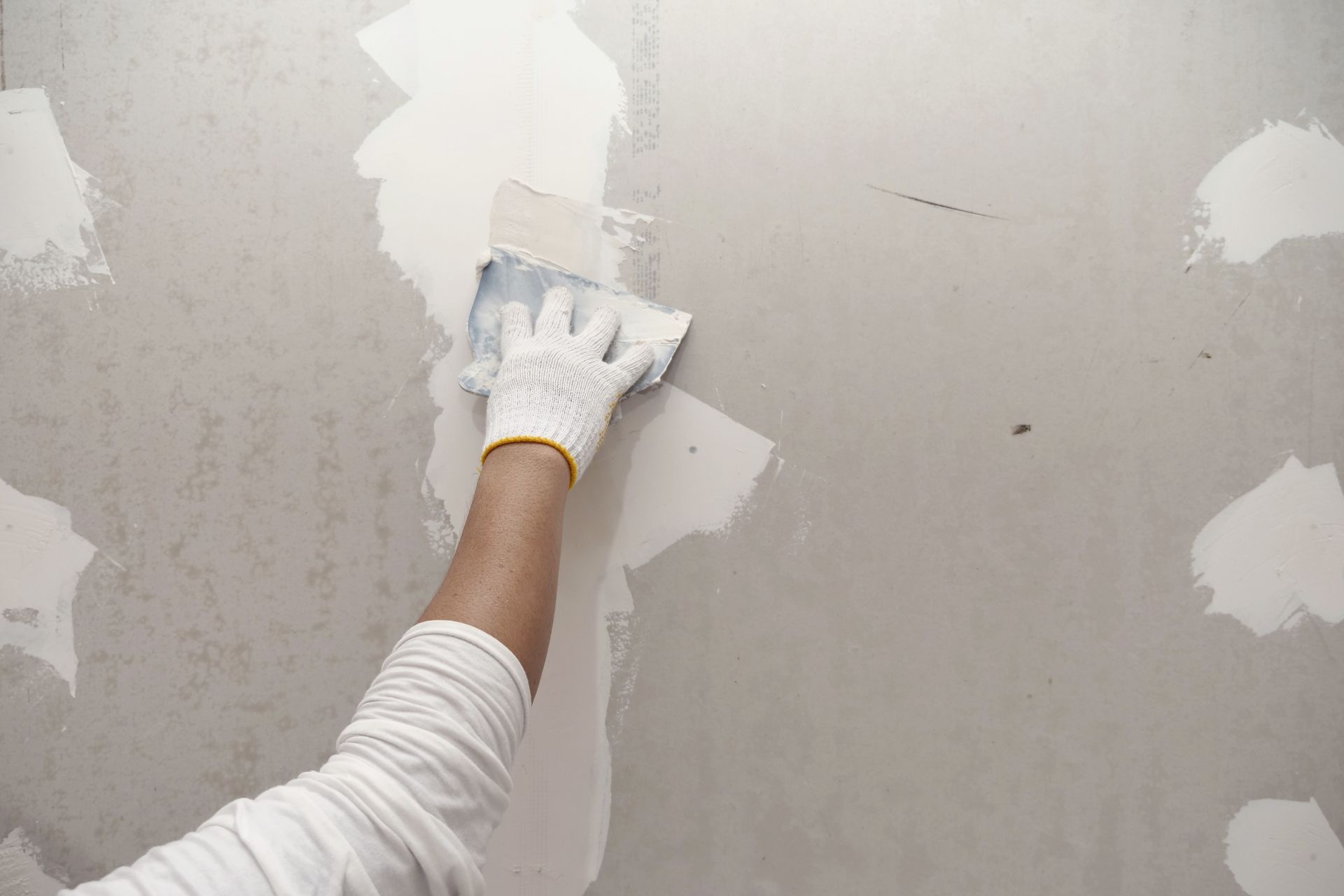
A crew member visits first to assess the damage directly, then cuts back to solid material before any compound touches the wall. Joint compound goes on in thin coats, each one allowed to cure before the next is applied, and the surface is sanded smooth ahead of primer. That sequencing matters because skipping coats or sanding too early leaves ridges that telegraph through paint—a problem that only shows up after the crew has left.
Arrange a visit with Peak Blue Services LLC to look at the damage and confirm what the repair will involve before any work begins.
How a Finished Patch Blends with the Surrounding Wall
The key difference between a patch that blends and one that reads as a repair is the feathering radius. Joint compound has to be spread well beyond the damaged area so the transition from patch to original wall happens gradually—typically over several inches on each side—rather than at a visible edge. On older plaster-and-lath walls, that radius often needs to be wider because the surrounding surface carries slight texture variation from decades of settling and repainting.
Once the final coat is sanded and primed, what you see is a wall section that accepts paint evenly without shadowing or raised edges at the patch boundary. Nail pops, which are common in older homes as framing dries and shifts, are set below the surface, dimpled, and filled so the head cannot push back through the compound after the repair cures.
Water stains require one additional step: the affected area needs a stain-blocking primer before any compound work, otherwise the stain bleeds through finish paint regardless of how many coats are applied. Identifying whether the moisture source has been resolved is part of the site visit, because patching over active moisture produces a repair that fails within weeks.
Common Questions About Drywall Repair Work
These questions cover how drywall repair and patching is actually performed, what affects the approach, and what to look for in finished work.
What is the difference between a mesh patch and cutting in new drywall?
A mesh patch works well for smaller holes where the surrounding drywall is solid and the edges are stable; for larger damage or areas where the board has gone soft from moisture, cutting back to the nearest stud and installing new drywall produces a sturdier repair that holds fasteners correctly.
How many coats of joint compound does a proper patch require?
Most repairs call for at least three coats—a base coat to fill, a second coat to level, and a finish coat for smoothing—with sanding between each one so the surface stays flat rather than building up ridges at the edges.
Why do nail pops keep coming back after a basic repair?
Driving the existing fastener back in does not solve the problem; the nail needs to be countersunk slightly below the surface and secured with a drywall screw nearby so the framing movement that caused the pop does not simply push the fastener out again.
How does a crew match texture on older plaster walls in Framingham homes?
Plaster surfaces often have a skip-trowel or sand finish that was applied by hand, so matching requires applying joint compound with similar tools and technique rather than a smooth skim—the goal is to replicate the pattern density of the surrounding area rather than apply a uniform texture across the patch.
What should the repair look like once it is ready for paint?
The patched area should feel flat when you run a hand across it with no raised edge at the boundary, accept primer without showing the compound color unevenly, and cast no shadow under raking light from a window or lamp held at a low angle.
Peak Blue Services LLC also performs drywall repair and patching in Natick, Ashland, Sherborn, and Wayland. To schedule a site assessment and go over the specific damage at your property, call (774) 414-8922.